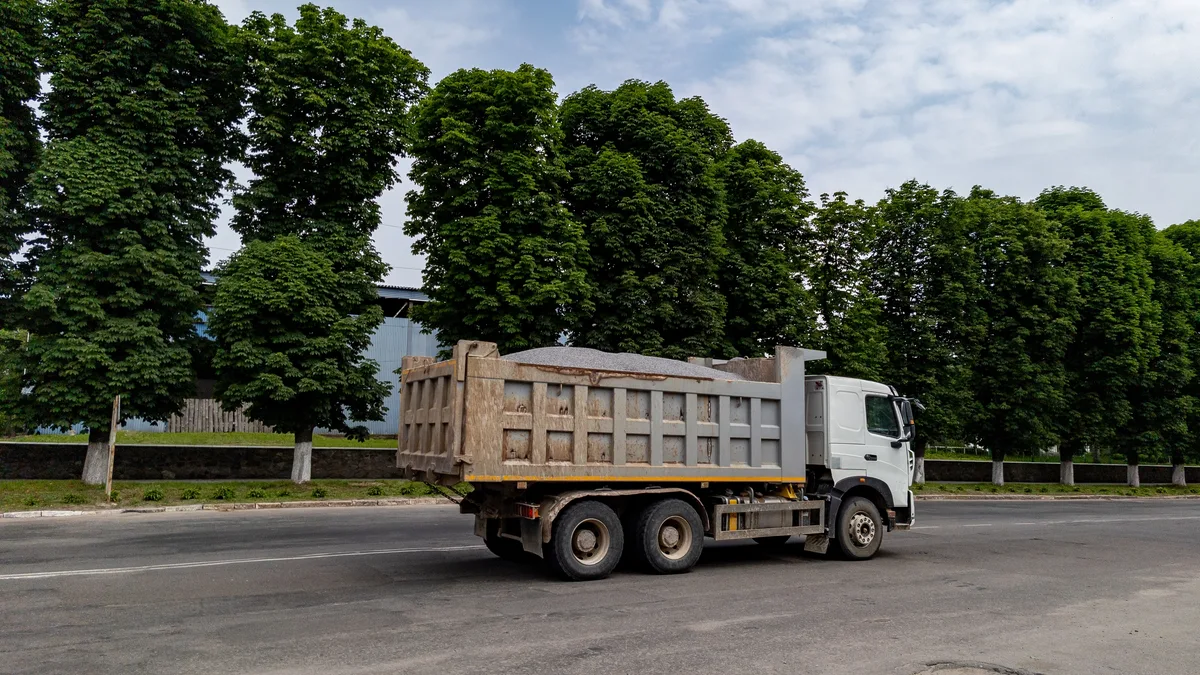

Starting a dump truck business in Texas means making three insurance decisions early: whether your hauling is intrastate under TxDMV or interstate under FMCSA, what limits your contractors will require, and how you will handle workers’ comp, since Texas lets private employers elect not to subscribe. For a new owner-operator with one truck, liability, cargo and physical damage usually run around $7,000-$12,000+ a year, as a typical range rather than a quote. Get those settled, quote before you buy the truck, and read the contractor agreements before you bind.
The Texas dump trucking insurance page covers the state’s rules for dump trucks in detail, and the Texas new venture trucking insurance page covers new carriers. This article puts the insurance steps in order.
Step 1: Intrastate or interstate?
Dirt, rock, sand and aggregate moved from one Texas site to another is usually intrastate. Intrastate carriers hauling for hire register with the Texas Department of Motor Vehicles Motor Carrier Division for intrastate authority. Hauling across a state line, or as part of an interstate shipment, needs FMCSA registration and authority. Many Texas operators hold both because their work changes.
The answer changes your filings and which liability minimum applies. The article on interstate trucking insurance explains the difference.
Step 2: Quote before you buy the truck
Dump insurance depends heavily on the truck and the driver. An older truck, a less common body or trailer, and limited dump experience can push the premium up or narrow the markets willing to quote. Quoting first lets you compare trucks on their real cost, insurance included.
Step 3: Collect your contractors’ requirements
Dump work runs on contracts. General contractors, site developers and material suppliers commonly require auto liability and general liability at stated limits, additional insured status, a waiver of subrogation, and sometimes workers’ comp. The strictest contract sets your limits. The article on who insures a contractor’s dump trucks covers how contractor-owned trucks differ.
Step 4: Decide on workers’ comp
Texas is the state where private employers can elect not to carry workers’ comp, called non-subscriber status. That election changes how employee injury claims are handled and can expose the employer to lawsuits it would otherwise avoid. Many contractors require their haulers to be subscribers anyway.
If you subscribe, workers’ comp for truck drivers usually runs around $1,500-$2,500+ per $50,000 in payroll. That is a typical range, not a quote. Make the choice with your agent and an attorney before you hire your first driver. The Texas Department of Insurance regulates the insurers and oversees the workers’ comp system.
Step 5: Set physical damage to real values
Dump trucks work hard, and rollovers while dumping on soft ground are a known loss pattern. Physical damage should be set to what the truck and body would cost to replace. If the truck is financed, the lender will require the coverage and name itself on the policy.
Real-World Scenario: Picture a hypothetical new San Antonio dump operator with one truck who elects non-subscriber status to save money. He lands a subcontract with a site developer, then reads the contract: it requires workers’ comp from every hauler with employees. He has just hired a second driver. He has to buy workers’ comp before he can start, and the job’s start date does not wait.
What do underwriters ask a new dump operator?
The truck and body, your dump experience and driving record, the job sites and radius, the material you haul, the contracts you work under, and whether you have drivers. The article on sand and gravel hauler insurance covers the aggregate side of the work.
What about general liability on job sites?
Dump trucks spend a lot of time on job sites, where the truck is one of many machines and trades. Damage or injury from operating the truck is usually auto liability. Damage from your other operations on the site, such as material dumped in the wrong place or a worker hurt by something other than the truck, can fall to general liability. Many contractors require both, with additional insured status.
The Texas Department of Transportation handles state highways and oversize and overweight permits if your work needs them. The article on loading and unloading insurance coverage covers the boundary between auto and general liability at the dump site.
What should you do next?
Write down the truck you plan to buy, the contractors you plan to work for and whether you will hire. Then start a quote and send it with your driving history and any contracts. We will tell you what the policy costs and what the contracts require.